Blog

As school librarians, we juggle so much – circulation, shelving, displays, and helping our students find the perfect book to spark their curiosity. It’s a lot to handle and, some days, it can feel like you need an extra set of hands (or five). That’s where library helpers come in! They’re the secret to keeping your library running smoothly while giving students a sense of ownership and responsibility. Whether it’s shelving books or organizing supplies, library helpers can transform your space into a more efficient and welcoming environment. Today, I’m sharing some tips and guidance for how to get library helpers started in your library! Why Library Helpers Are a Game-Changer Having library helpers has completely changed how I manage my library. They don’t just take a load off my plate. They also make the library feel like a shared space where everyone contributes. These student volunteers bring so
If you’ve ever watched your kiddos light up when they connect with a story, you know how powerful books can be. When I introduce different types of genres in the school library, it’s a chance to open the door to new worlds, big ideas, and unforgettable adventures. Picture and chapter books are great for lessons because they’re perfect for breaking down genre elements while keeping children engaged. Whether you’re working with primary students or upper elementary readers, there’s something magical about finding just the right book to bring a genre to life. Today, I’m sharing some favorites that I use when teaching the different types of genres to my students. Breaking Down the Types of Genres Before diving into book recommendations, let’s take a moment to break down what makes up each genre. Understanding the key features of each genre helps our students recognize patterns and appreciate the storytelling
Navigating the writing process can be a common challenge, both for me personally and for my students. From deciding where to start to organizing thoughts, the struggle is real. Whether assisting my students in their writing journeys or diving deep into reading comprehension, helping students work through all the thoughts and ideas can be challenging. That’s where the magic of graphic organizers comes in! Today, I’ll walk you through why graphic organizers are a must-have in your toolbox, what exactly they are, and throw in a few examples that you can use with your students! What Are Graphic Organizers? Have you ever been lost? Maybe you’ve been lost literally in a new place, or maybe you have felt lost in a school subject. Both scenarios create an icky feeling of being overwhelmed and hopeless. When students feel like this they have racing thoughts overpowering each other in their heads,
While sometimes it feels like there aren’t enough hours in the day to tackle everything on our to-do list, being an elementary or middle school librarian is such a rewarding gig! From cataloging new books to organizing reading programs and helping students find their next favorite read, there’s a lot of variety in this job! If you love what you do, but need some systems to help make it more efficient, I’ve got your back! Let’s talk about my school librarian survival kit and how it will be a total game-changer for you. What’s Included in This School Librarian Survival Kit My school librarian survival kit has EVERYTHING you need to rock the new school year. It includes lesson plans, activity ideas, library management tips, and even some fun decorations to brighten up your space. With these resources, you’ll have all the tools to keep your library running smoothly
Today, let’s chat about my top picks for fiction and nonfiction book pairings tailored for the older crew. Specifically, those spirited 4th to 7th graders. Guiding these students into the magical realms of both fiction and nonfiction is a special task. As they navigate this pivotal age range, I’ve found that while fiction tends to steal the spotlight, coaxing a 6th grader into exploring nonfiction can be quite a rewarding challenge. In my experience, the key to successful book pairings for this age group lies in aligning the reading choices with their individual interests. To spice things up, I often turn the decision-making process into a fun activity. I often conduct a poll to unravel the topics that spark their curiosity and get them excited. So, together, let’s unravel how book pairings captivate our older students as they journey through fiction and nonfiction texts! Oh and before we jump
As summer winds down and we start to get ready for the new school year, it’s that time of year when we begin leisurely searching for back-to-school activities for the library to kick off the year. Let’s make your life easier by setting things up now, so you can stress less and relax more during the back to school madness. Today, I’m sharing some of those must-haves for the library to start the year off right and make your life so much easier! Why Do School Librarians Need to be Ready for Back to School Season? As we know, back to school time in the library is crucial. It’s the perfect moment to set the rules and procedures that will guide the rest of the school year. We start to build relationships with our students, and we figure out schedules. It can get a bit chaotic and crazy, but
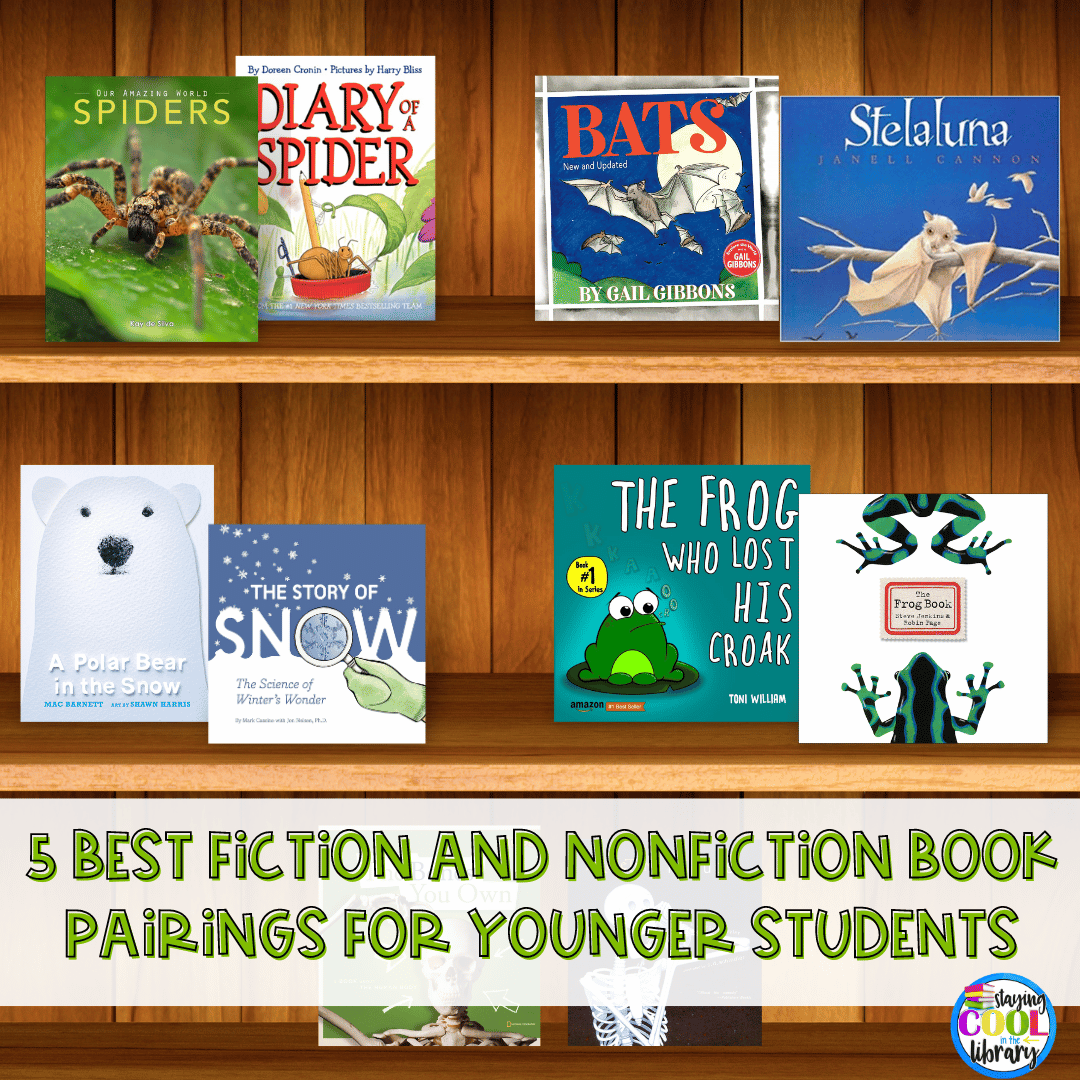
Exploring the world of fiction and nonfiction through book pairings is truly a highlight when working with my students. It’s a strategy that can be used with any age to unravel the characteristics of each writing style. More than just an academic exercise, book pairings inspire students to dive into both realms of fiction and nonfiction. In the world of younger students, these pairings play a pivotal role in laying the foundation for their literary journey. Choosing shorter yet captivating books for grades K-2 ensures that there’s ample time for thorough exploration. The key is in the ensuing discussions where our students start to discern the differences between fiction and nonfiction. It’s a delightful process that fosters a love for reading and a keen awareness of the diverse literary landscapes that await exploration. Importance of Fiction and Nonfiction Book Pairings for Younger Students It’s safe to say for all
How do you feel about reading wordless picture books to your students? Do you know how powerful wordless picture books actually are? If you want to truly measure your student’s comprehension skills or imagination, try reading wordless picture books with them and see if they can understand what is happening in the story based on the pictures alone. In addition, the low pressure nature of a picture book allows children of all abilities to join in and feel successful. Wordless picture books are great resources to encourage joint interest, vocabulary, sequenced language, making inferences and engaging in discussion. Here are 6 wonderful wordless picture books to read with your students, as well as some lesson ideas to incorporate with them. Unspoken: A Story from the Underground Railroad by Henry Cole  Summary: When a farm girl discovers a runaway slave hiding in the barn, she is at once startled and
The Olympics are once again just around the corner. After a yearlong postponement due to the Coronavirus pandemic, the Games are set to kick off later this summer in Tokyo, despite the ongoing spread of COVID-19 and lingering concerns in Japan. With the Olympics happening every 2-4 years between summer and winter, children should have some exposure to the Olympic games at a young age so that they understand them. Reading Olympic themed books about them can help get kids excited and may even turn them into fans! It is interesting for students to learn about how much the athletes train for the Olympics, as well as the mental will-power that must be withstood at such a young age. Let’s look at 10 Olympic themed books kids can get excited about! The Frog Olympics Grades: Preschool-Kindergarten Summary: The actual Olympic Games definitely won’t include events like fly catching. But
Choosing how to decorate your library is more important than you may realize. The theme you choose will set the tone for the entire year. The posters and décor is the first thing anyone will notice when they enter the library. You want to create a warm and inviting atmosphere that feels welcoming to everyone. You also need to choose something that you like because you have to live with it the entire school year. Printing Tips Choosing a library theme is only half the battle. Next you have to print and laminate everything. Printing can definitely be a challenge, especially if you are not able to print color copies at school. If you are printing from home, having a good-quality color printer is a must. Just about everyone I know uses HP instant ink. Honestly, I do not use it myself. However I have never heard anything negative

Staying Cool in the Library is my blog, where I share my passion for fostering a love of reading with children. As a librarian, I believe reading should be fun and accessible to all students. That’s why I share engaging and interactive lesson plans, creative ways to build exciting library collections, and resources to inspire even the most reluctant readers in any classroom or library. Check out my blog posts and products in my store, and join my email list below.

Join the free resource library!
Discover new ideas and strategies
Be the first to know about new and updated products
Access to the free VIP RESOURCE LIBRARY!
Thank you for subscribing!

Categories