


One of the most important lessons you can teach in the elementary school library is book care. It’s not just about keeping books neat. It’s about helping our kiddos understand respect, responsibility, and the shared joy of reading. When our students know how to care for books, they’re learning life skills that will serve them well everywhere. When I first became a librarian, I assumed older students already knew how to handle books responsibly. I quickly realized that many kids didn’t have books at home or hadn’t been to a public library before. For them, the elementary school library was the first place they encountered books they were trusted to borrow. That’s why book care became a central lesson, not just for kindergarten and first grade, but for every grade level.
Disclosure: This post may contain affiliate links, meaning I receive a small commission if you decide to make a purchase through one of my links, at no cost to you. Please read my disclosure policy for more information.
Why Book Care Matters in the Elementary School Library
Teaching book care in the elementary school library is about so much more than keeping your shelves looking nice. It’s about helping your students feel like valued members of the library community. When they understand that books are shared resources, they feel proud to be part of something bigger. A space where everyone can explore stories, learn new things, and stretch their imaginations.
For many of our students, the elementary school library is the only consistent access they have to books. That makes teaching book care essential. Our kiddos need to learn how to treat books with care so they last for the next reader, and the next, and the next. By building these habits early, you help create a culture of respect and responsibility that carries through the school year and beyond.
Approaching book care lessons with creativity and positivity is key. Instead of nagging or lecturing, you can turn these moments into engaging conversations and activities. When our kids connect emotionally to the “why” behind the rules, they’re much more likely to remember them and apply them when they leave the library with books in their backpacks.
Teaching Book Care with Picture Books
One of the easiest and most enjoyable ways to introduce book care is through picture books. These stories spark conversation, create memorable examples, and work beautifully across all elementary grade levels. Our kids love hearing about characters who face the same challenges they do. It opens the door to talk about what good book care looks like.
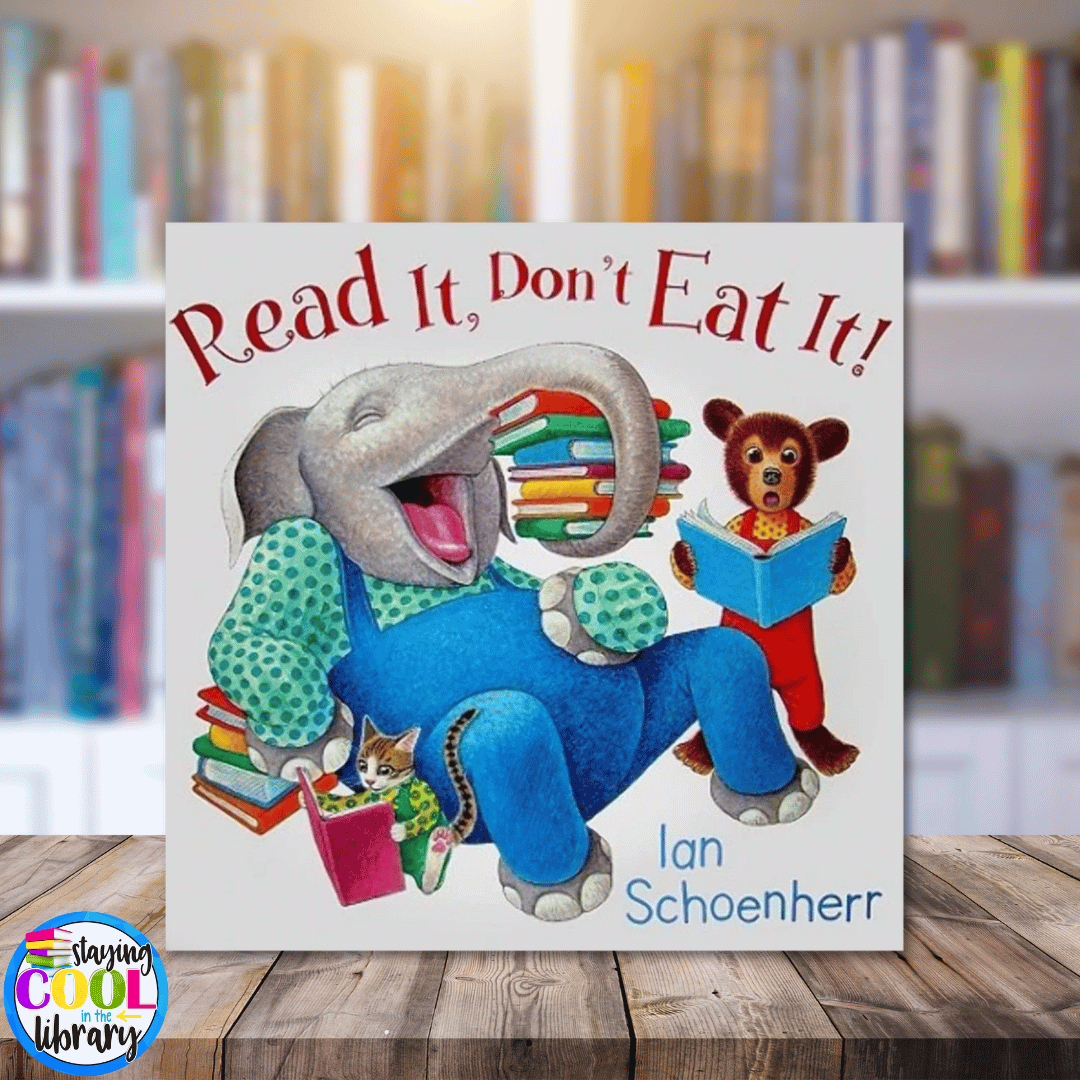
Books like A Perfectly Messed-Up Story by Patrick McDonnell or Read It, Don’t Eat It! by Ian Schoenherr use humor to help our students think about sticky hands, scribbles, and other book mishaps. Manners With a Library Book by Amanda Doering Tourville is another favorite, offering a nonfiction angle with colorful illustrations that reinforce polite library behavior.
Some stories aren’t specifically about book care but easily lead into great discussions. The Children Who Loved Books by Peter Carnavas is a sweet story about a family’s love for reading. At the same time, No T. Rex in the Library by Toni Buzzeo makes our kids laugh and think about behavior in the library. When you use picture books as part of your book care lessons, you’re creating a shared experience that your students will remember every time they check out a new title.
Learn More About Helpful Picture Books
Read It, don’t Eat It! by Ian Schoenherr
With catchy rhymes and engaging illustrations, this book goes over all the basic book care rules in a way that’s both memorable and funny. It’s perfect for your younger students who need a simple but effective reminder to treat books with care.
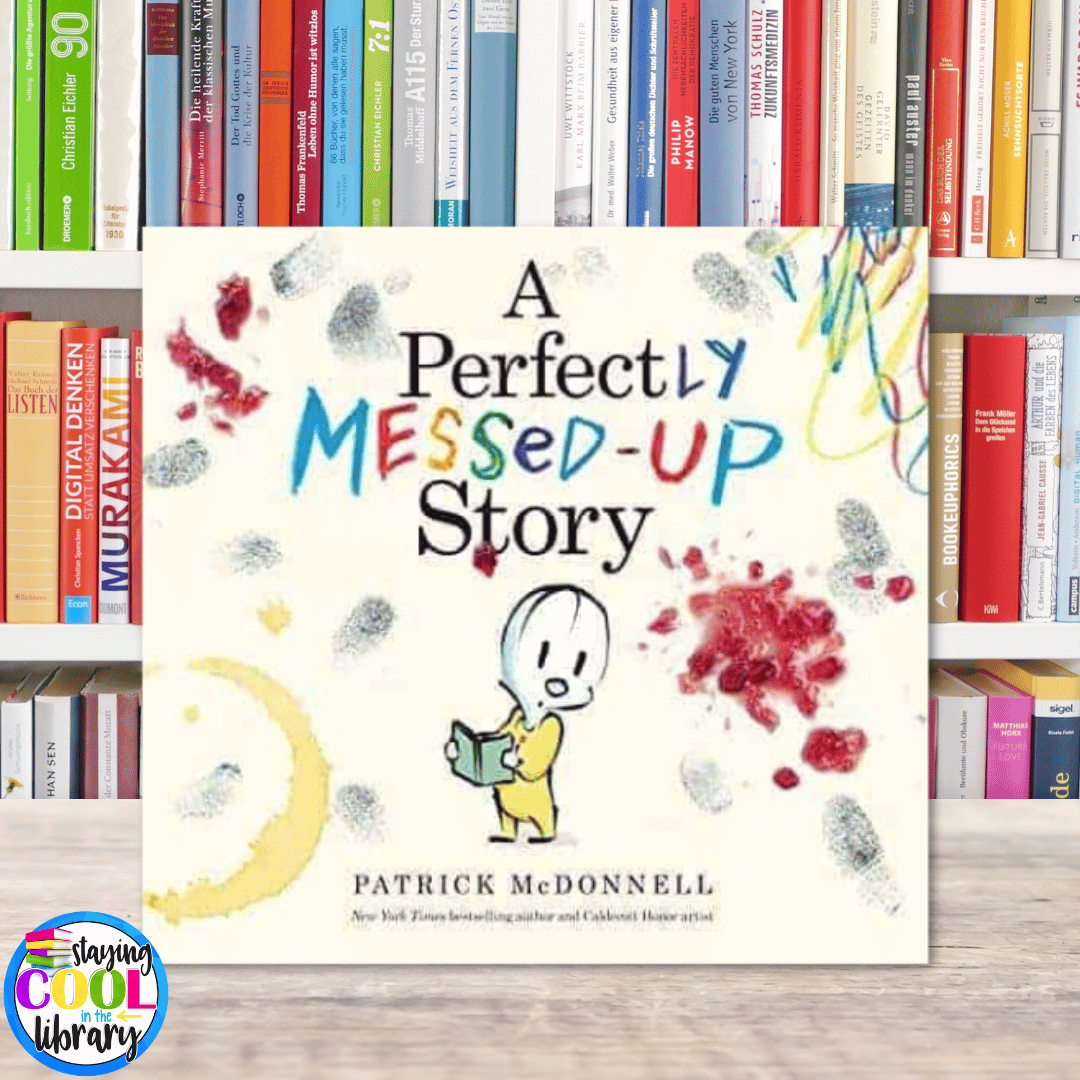
A Perfectly Messed-Up Story by Patrick McDonnell
This playful story follows Little Louie, who’s excited to tell his tale. That is, until he discovers jelly stains, scribbles, and fingerprints all over his book! It’s a fun and lighthearted way to get young readers thinking about how our actions affect library books and why gentle handling matters.
A great way to expand on this story after reading is by asking students to think about a time something that was important to them got “messed up”. Ask questions like:
“How did you feel?”, “How did you solve the problem?”, and “How could it be avoided in the future?”
These types of questions prompt deeper thinking about taking care of important things and problem-solving when we make a mistake. Any elementary school library keeper knows that there will be slip-ups in book care! It’s what we do with those teaching moments that counts!
Manners With a Library Book by Amanda Doering Tourville
This nonfiction pick lays out the dos and don’ts of library behavior using clear text and bright illustrations. It’s a great resource for setting expectations, especially when introducing your students to the elementary school library for the first time.
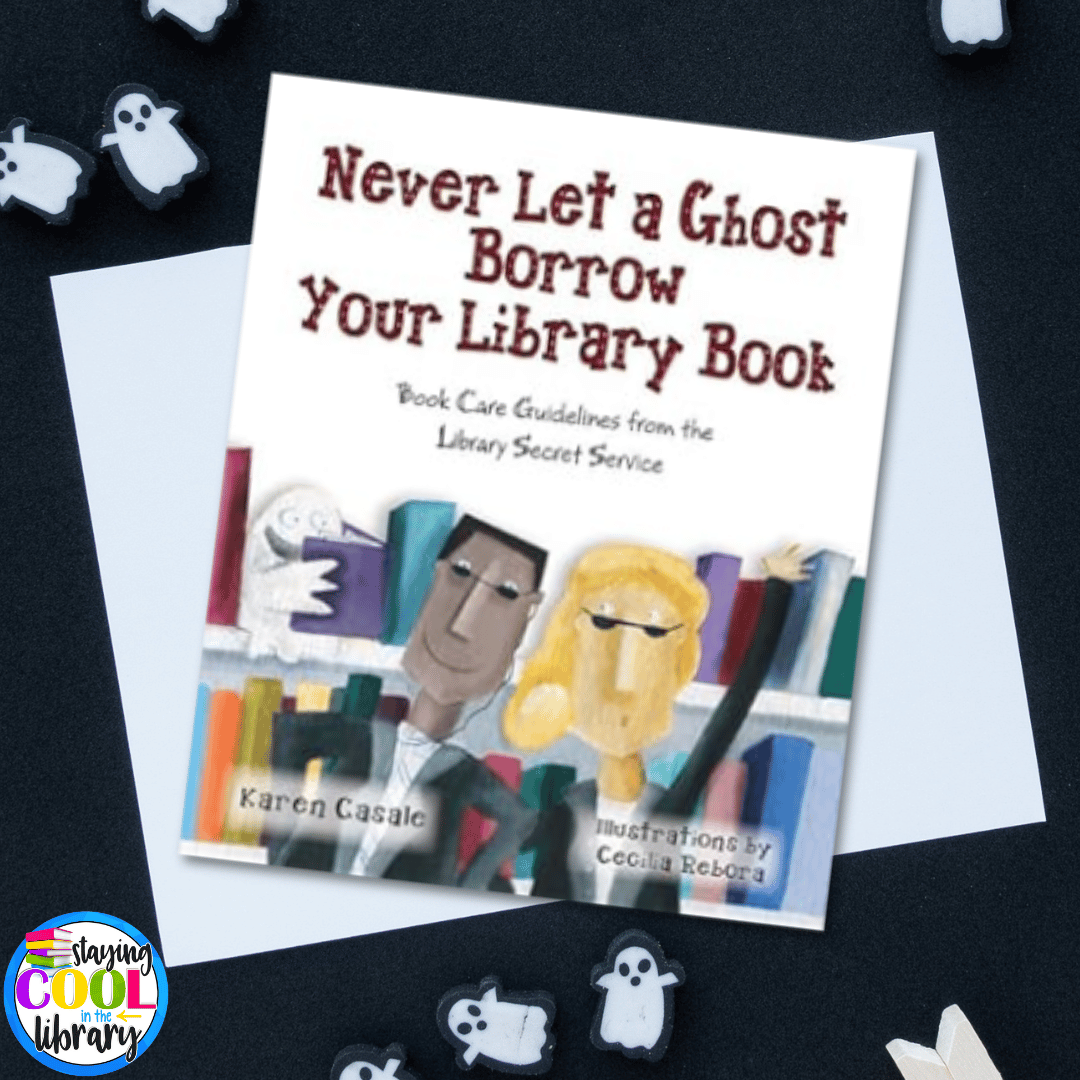
Never Let a Ghost Borrow Your Library Book by Karen Casale
If you’re looking for a book that’s written specifically for teaching book care skills in the elementary school library, this is the one you want!
This silly book uses humor and imagination to walk through key book care rules. Kids usually love the idea of ghosts getting into mischief. It opens up lots of opportunities for discussion on what’s okay (and not okay) with books. Not to mention, the ghostly humor is a lot of fun to read aloud with your students!
After reading, consider expanding on these topics by making an anchor chart that lists the dos and don’ts of library book care. Ask students to share what they remember and write simple sentences and pictures as you go. This will be a great resource for your lesson, and something you can revisit as needed throughout the school year.
The Book that Jake Borrowed by Susan Kralovansky
In this humorous twist on There Was an Old Lady, Jake’s borrowed library book finds itself in one messy situation after another. Your students will giggle as they follow along, all while learning how not to treat a library book!

Mr. Wiggle’s Book by Paula M. Craig
Another important point of discussion when covering book care is cause and effect. Many kids might not have considered that their actions have a ripple effect on many other people who check out the book afterward.
A great book to teach this idea in your library lessons is, Mr. Wiggle’s Book, by Paula M. Craig. Mr. Wiggle, is a gentle bookworm who takes your young readers through all the ways books can be hurt, from ripped pages to scribbles. He explains why it’s important to treat them kindly.
I love this book because Mr. Wiggle shares his point of view when it comes to book care. I know this story will have your kids giggling as you discuss why it’s important to take care of books, and what would happen if we didn’t!
The Library Gingerbread Man by Dotti Enderle
A library spin on the classic gingerbread man story. This book is both funny and engaging. It reminds your students about library rules while keeping them entertained with a familiar character on the run.
What Happened to Marion’s Book by Brook Berg
Marion the cat accidentally damages her library book and worries about what to do. This story helps your students understand that accidents happen and that being honest and responsible is always the best approach.
Additional Picture Books for the Elementary School Library
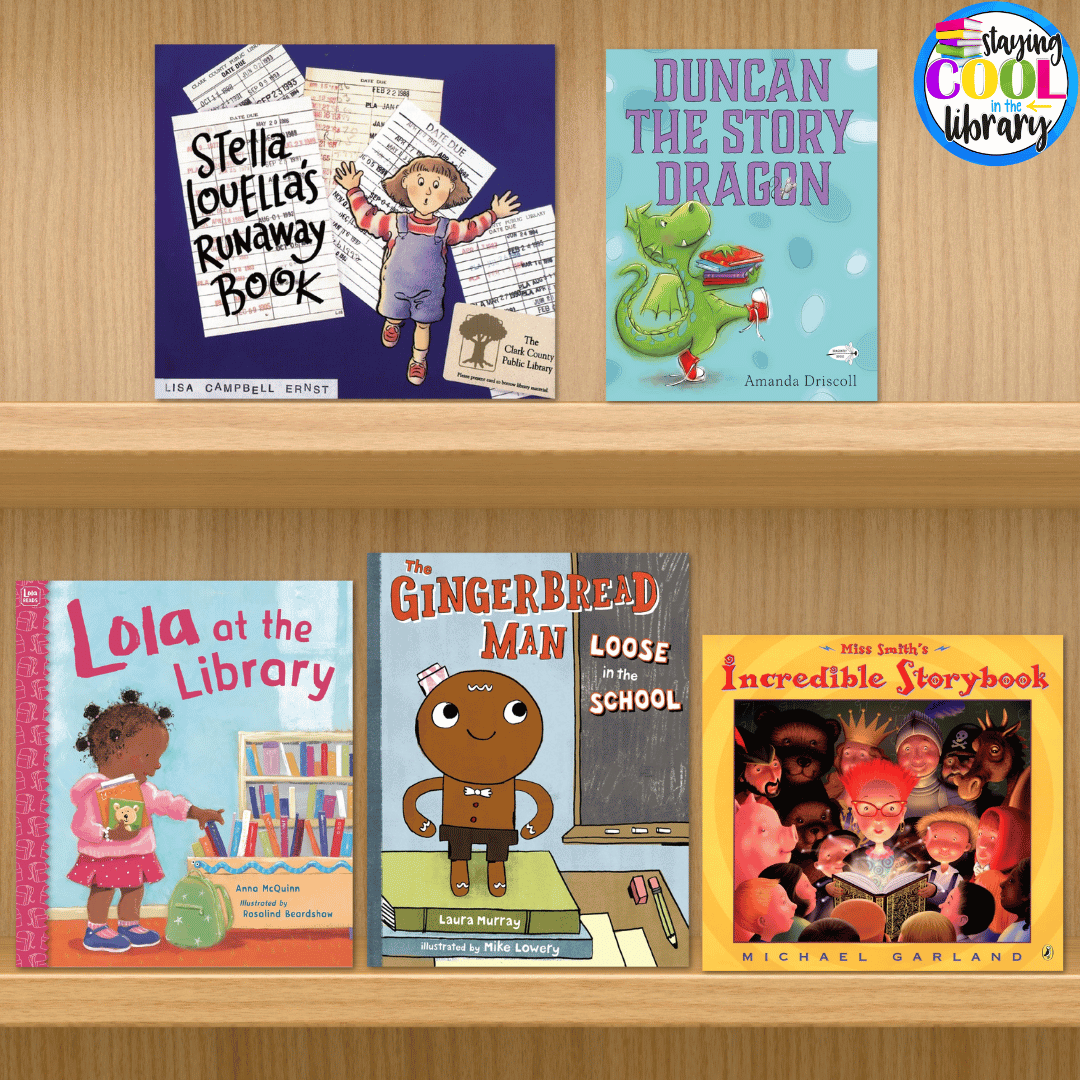
In addition to these, there are other books that I always plan to read at the beginning of school. They are not specifically about book care rules, but still lead to starting a discussion about library behaviors after reading.
Be sure to check out these tried and true favorites as well, if you’re looking for even more inspiration!
- Duncan the Story Dragon by Amanda Driscoll
- Miss Smith’s Incredible Storybook by Michael Garland
- Lola at the Library by Anna McQuinn
- Stella Louella’s Runaway Book by Lisa Campbell Ernst
- Gingerbread Man Loose at the School by Linda Murray
Book Care Lessons for the Elementary School Library
Ready to take your book care activities to the next level? After reading, try incorporating an interactive lesson on what you’ve learned to review, discuss, and make the concepts more concrete. My Book Care Activity Pack is packed with engaging materials about book care rules and expectations to bring your lessons full circle.
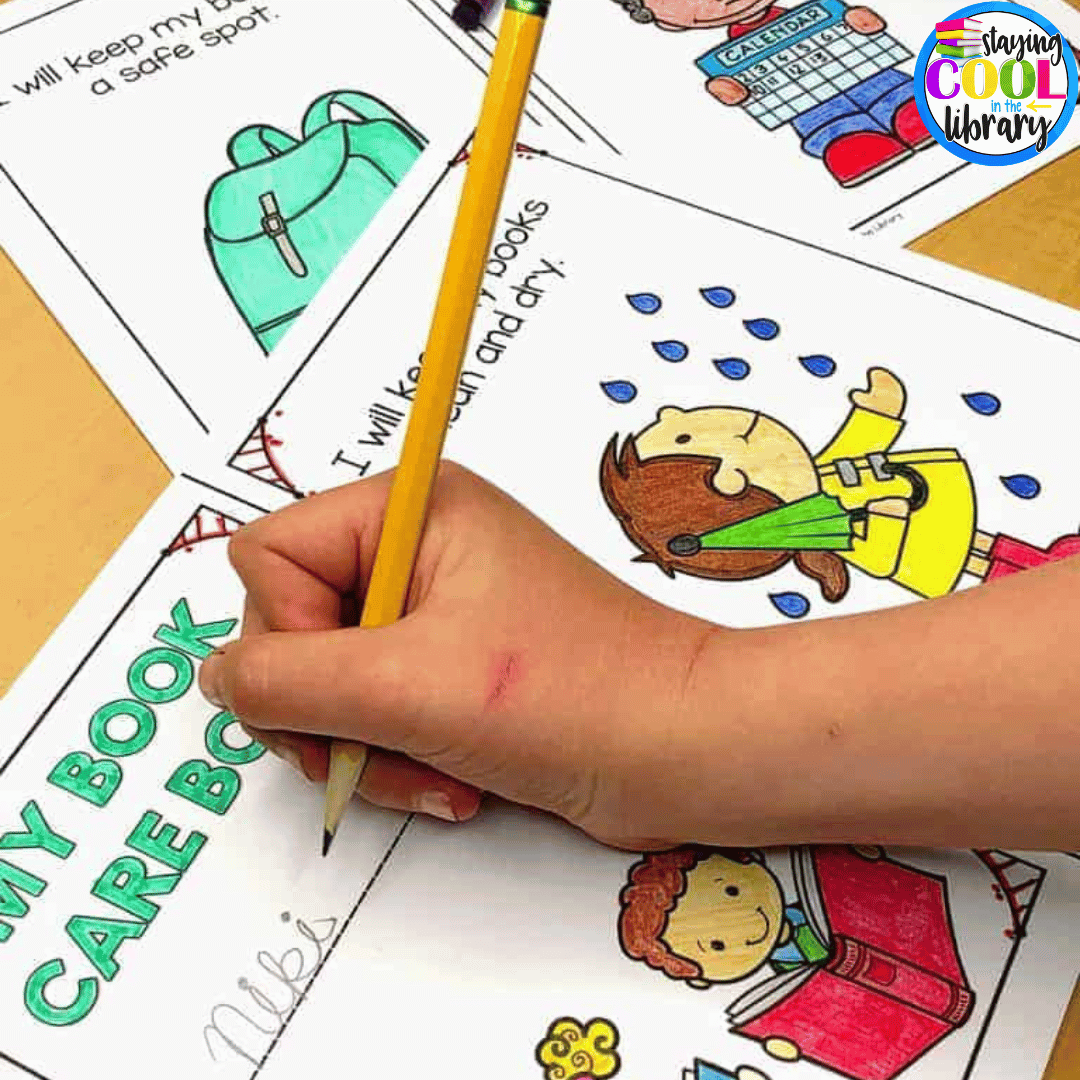
Inside you’ll find a sorting game, an activity booklet, posters, and more! The included booklet lets your kiddos cut, color, and take home what they’ve learned. This helps get your families involved, too! Posters, worksheets, and coloring pages add even more layers of reinforcement, creating a library environment where book care expectations are always visible and understood.
The sorting game is very versatile, which allows you to use with many different age groups in the elementary library setting. There are headings that read “Yes We Do” and “No We Don’t” along with a variety of different cards to choose from. There are picture cards, as well as sentence cards, so you can tailor this activity to your group and work together to sort good and bad book care habits. I recommend laminating these and using them in a pocket chart as a whole group lesson. Afterward, you can use it as a center activity to see how much your kids remember!
The resources in this Book Care Activity Pack will come in handy as you teach the rules of book care at the beginning of the year, as well as throughout the school year when it’s time to revisit them.
Show Your Students Real Examples of Books Needing Repair

One of the most eye-opening ways to help your students understand book care is to show them real-life examples of damaged books. Kids are naturally curious. When you hold up a book with a torn page, crayon marks, or a chewed cover, they’re eager to figure out what went wrong. Together, you can brainstorm how that damage might have happened and what could have been done to prevent it. These discussions bring abstract rules to life, making them relatable and real.
In my school library, I love inviting my students behind the scenes to see the “book hospital.” This is where I keep all the tools I use to fix minor book problems, such as book tape, glue, special erasers, and even gentle page flatteners. Giving my students a peek at the repair process not only satisfies their curiosity but also teaches them that while some damage can be fixed, it’s always better to handle books gently from the start.
This part of your book care lesson can be especially impactful because it balances responsibility with reassurance. Your students see that mistakes happen. They also learn that their actions matter and that they can help protect the library’s collection. Plus, they’ll love the sense of “insider knowledge” that comes with knowing how the library keeps its books looking good for everyone!
Using Digital Tools to Teach Book Care
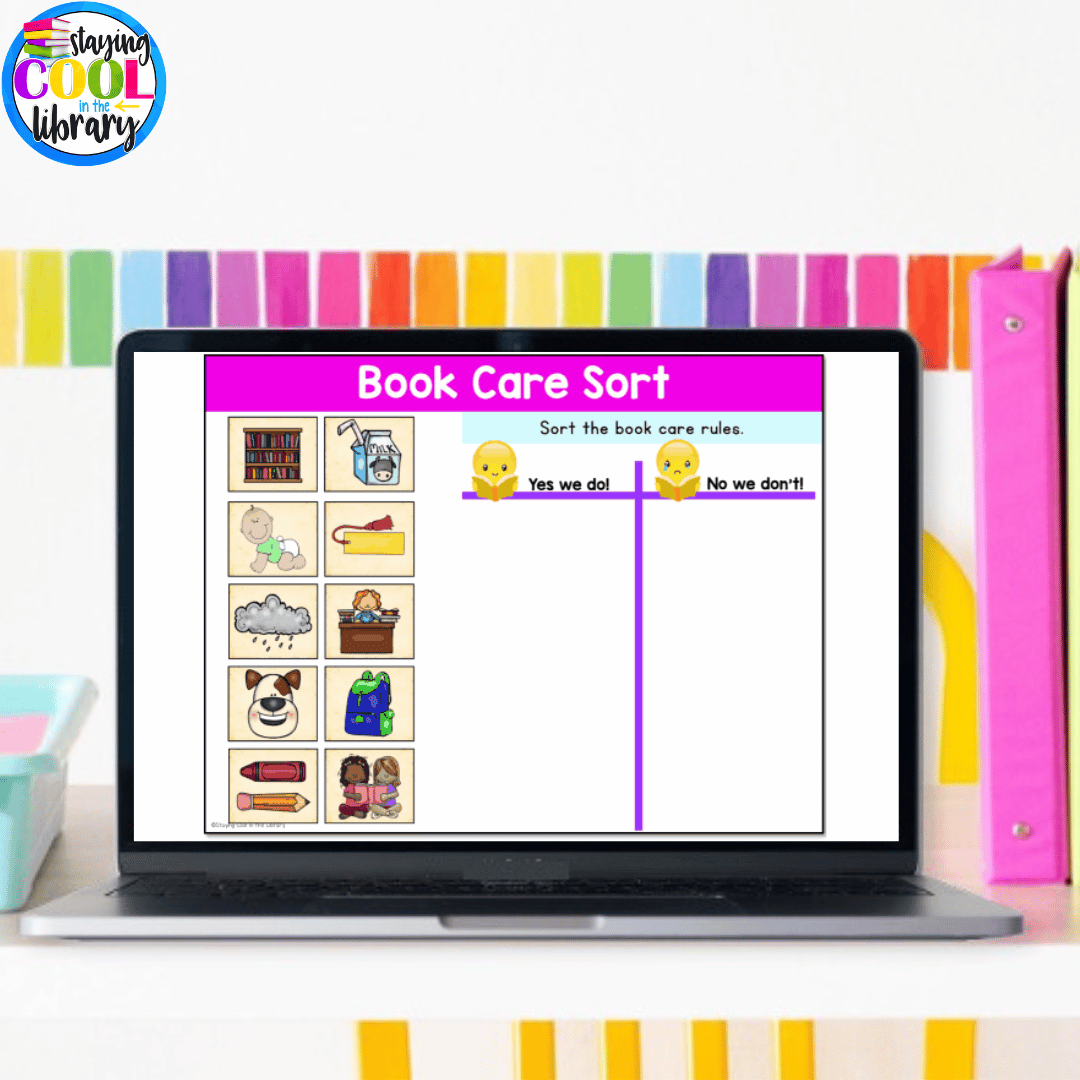
In today’s school libraries, digital learning tools can make a big impact. Teaching book care doesn’t have to stay in the physical world. You can bring it to life on your SmartBoard or Chromebooks with a Google Slides book care sort. This digital activity works beautifully as a whole-group lesson early in the year and as an independent or center activity later on.
Your students will love dragging and dropping pictures or sentences into “Yes” and “No” categories. It’s especially helpful for your younger learners who are still developing their reading skills because the visual cues make the activity accessible to everyone. Plus, when they see book care lessons in both print and digital form, it reinforces the message in multiple ways.
If you’re introducing new technology skills in the library, this kind of activity does double duty. Your students can practice using digital tools while reviewing important library expectations. As a bonus, it’s easy to revisit later in the year when you want to refresh your students’ book care knowledge without pulling out all your physical materials again.
Reinforce Book Care with Coloring Pages and Bookmarks
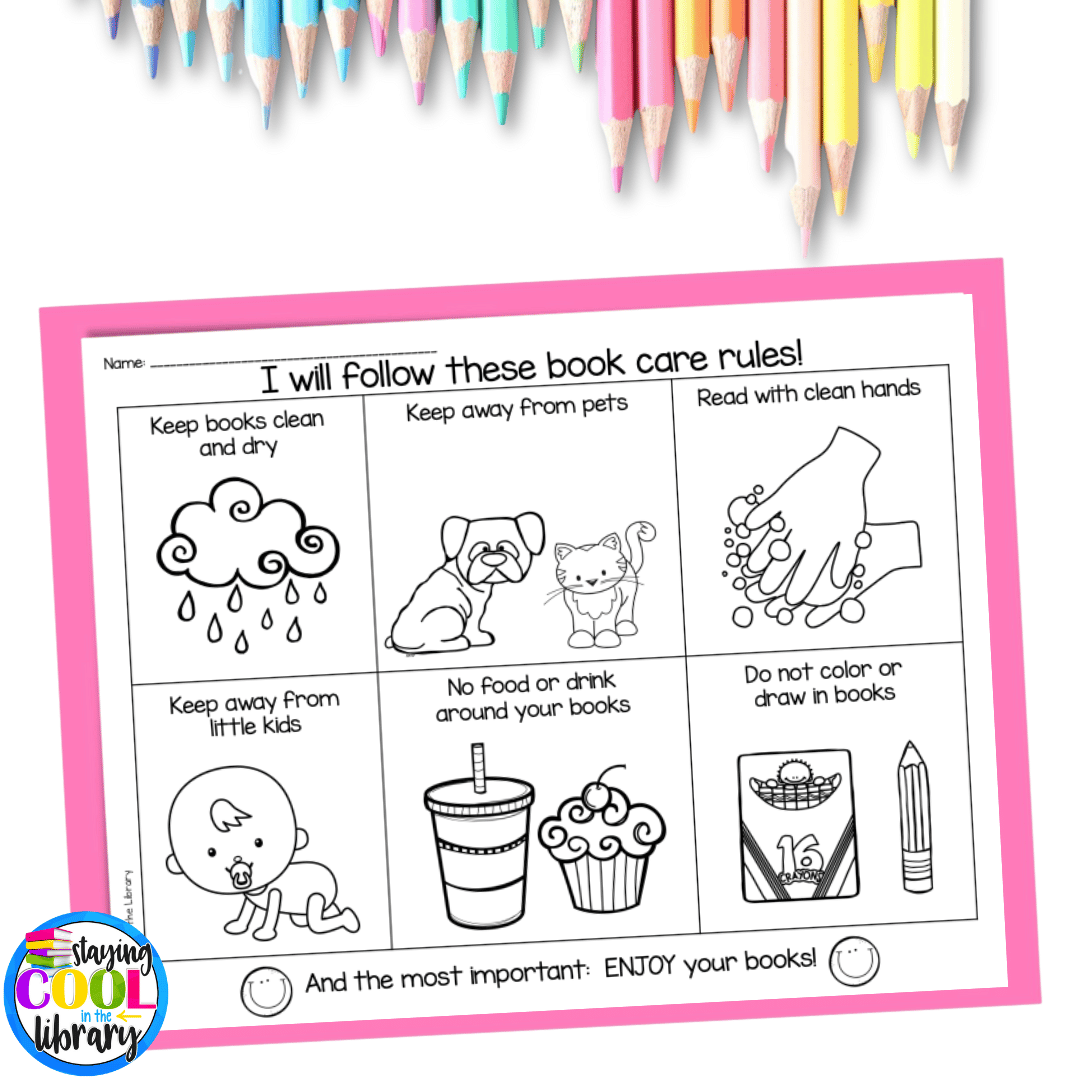
Another fun way to reinforce book care in the school library is by offering your students something they can take home, like a Book Care Rules coloring page or bookmarks. These little extras are more than just cute freebies. They give your students a visual reminder of the rules and a sense of ownership over what they’ve learned.
Coloring pages are especially great for your younger students. As they color, they’re also reviewing the rules, which helps reinforce the message in a creative way. It’s an easy activity to use at the end of your book care lesson or as a quiet task after book checkout. Plus, your kids love showing off their finished coloring pages to family members, which helps spread the message beyond the library walls.
Bookmarks are another favorite because they’re both useful and meaningful. When your students have a special bookmark that reminds them of how to care for their books, it keeps the rules top of mind every time they sit down to read. Since they’re free and easy to print, you can offer them throughout the year, not just at the start, as a simple way to celebrate good book care habits and keep the conversation going.
Building a Culture of Book Care in the Elementary School Library

Teaching book care isn’t just a one-and-done lesson. It’s something you weave into the culture of your space all year long. When your students see book care expectations displayed on posters, practiced in activities, and reinforced through conversations, they internalize those habits as part of what it means to be a library user.
With these resources, you help your students connect emotionally and practically to the idea of taking care of books. When they take those lessons home, you’re extending the impact beyond the walls of the library.
Most importantly, remember to keep the tone positive. I always tell my students that accidents happen. Sometimes a puppy will chew a book, or a sibling will spill their milk on it. When something like this happens, they need to be honest about it. Reassure your students that together you’ll make a decision on how to handle the situation. I do not want them to be afraid to tell me about a mistake, after all! When your kiddos feel trusted and supported, they rise to the occasion. You also end up with a library full of responsible, excited readers.
Save for Later
Love these tips? Save this post to your school library Pinterest board so you can come back anytime you’re planning your book care lessons or looking for fresh library ideas!

3 Responses
Incredible post.
Do you have google slides for book care for 4-5th grades?
No I don't.