


As librarians, we might not give grades for our class, but we do teach valuable skills that help our students with their core subjects. After a class, it is always nice to have feedback to know whether our students understood the lesson, what questions they have, or how they can apply what they learned. Using exit tickets in the school library is a great way to do this and it has been a game-changer for me. Keep reading to find out how exit tickets can benefit you as a school librarian.

Purposes of Exit Tickets in the School Library
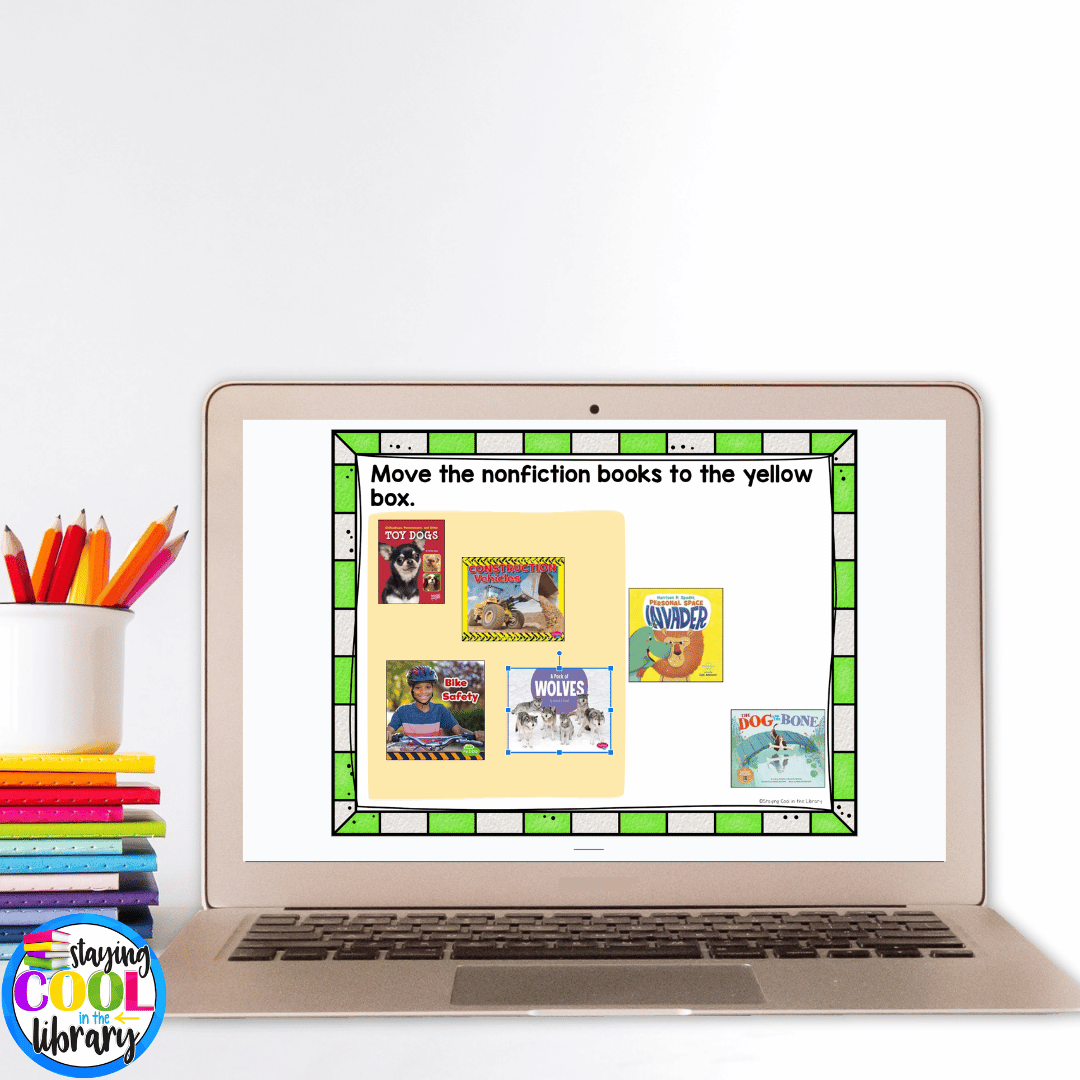
One of the easiest ways I have found to do informal assessments and checks for understanding is through exit tickets. These little slips of paper focus on just one skill or concept at a time. Quite often, it is one question that relates to our lesson. This makes them quick and simple for both my students and myself.
While exit tickets are a fantastic way to check for understanding of a concept, their usefulness goes beyond that. For instance, I use exit tickets to tap into my students’ prior knowledge on a topic. This helps to give me a great starting point for my lessons. They also help me spot any misunderstandings so I know exactly what needs to be clarified.
Exit tickets in the school library are invaluable for determining whether the content needs to be re-taught or if my students have grasped it well enough to move on. Plus, these tickets give me a chance to reflect on my teaching methods. If my students are struggling with a particular concept, I can rethink my approach and find new ways to make the material click for them. It’s all about continuously improving and ensuring that each of our students is getting the most out of our library sessions.
Benefits of Exit Tickets in the Library
Immediate Feedback with Exit Tickets

One of the greatest perks of using exit tickets in the school library is the immediate feedback they provide. Typically, I teach the same lesson to every class in a grade level. So, if I’m teaching third graders about biographies, I write one lesson plan for all five classes. Here’s where exit tickets really shine: if the first class struggles with remembering the difference between a biography and an autobiography, I can instantly see that through their exit tickets.
Based on this feedback, I can tweak the lesson plan for the remaining four classes. Maybe I’ll add a fun activity or a catchy mnemonic to help them remember the differences better. This way, I’m not just sticking to a static lesson plan but adapting in real-time to meet my students’ needs.
The following week, I only need to revisit and reinforce the concept with that first class. This method saves time and ensures that all of my students get the most out of each lesson. By using exit tickets, I can keep my teaching dynamic and responsive, making sure that every student, no matter which class they’re in, understands the material fully.
Tapping into Prior Knowledge
Before I start a new unit or topic in my lessons, I love to find out what my students already know. A week or two before we start, I give my students an exit ticket about the upcoming topic. Their responses help me plan a lesson that meets them right where they are. No more wasting time on something they already have a good grasp on.

For example, when I’m teaching a class of fourth graders about the author’s purpose, I love to start with an exit ticket before diving into the lesson. This quick check helps me see what the students already know about the topic. Besides the obvious benefit of tailoring my lesson to their knowledge level, there’s another reason why this is super useful, especially for librarians like me.
Take, for instance, Mrs. Smith’s class. If the exit tickets show that her students already have a solid grasp of the author’s purpose because she’s reviewed it thoroughly, I know they just need a quick refresher. On the other hand, if Mrs. Jackson’s students reveal through their exit tickets that they’re unfamiliar with the reasons why authors write, I can see that they’ll need more in-depth teaching on the subject.
This approach allows me to plan my lessons accordingly. This ensures that each class gets exactly what they need. By using exit tickets to tap into prior knowledge, I can avoid wasting time on concepts students already understand and focus on areas where they need more support.
Professional Goals
Are you required to set professional goals at your school? At my school, we set SMART goals and then revisit them later in the year. Gathering the necessary data for professional goals can be quite a challenge. Exit tickets have been a lifesaver in this area because they help me collect the data I need to prove the effectiveness of my lessons and to show how well the students are learning. It’s a straightforward way to get tangible evidence of student progress.
A few times, I’ve taken it a step further by keeping the exit tickets from one class over the course of the year. By entering the data into a spreadsheet, I can track and showcase learning growth and progress. This not only helps me see how my students are improving but also provides solid proof when it comes time to evaluate my professional goals.
Using exit tickets for this purpose makes the process so much easier and more efficient. It’s a clear, organized way to document and reflect on both student achievements and my own teaching effectiveness. Plus, it’s incredibly satisfying to see the tangible progress my students make over time, all thanks to these simple yet powerful little tools.
Exit Ticket Management
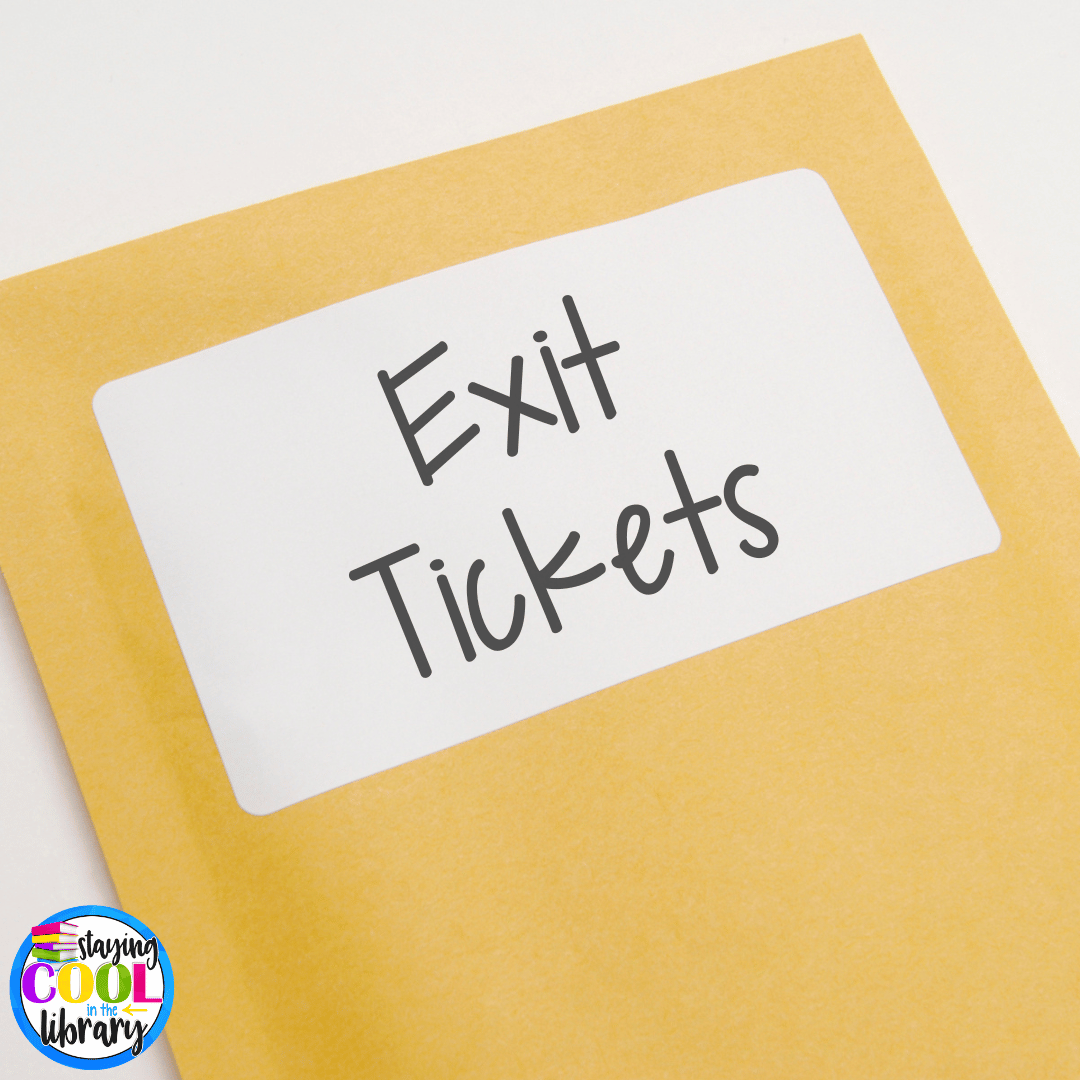
I use a very simple method to collect exit tickets that works like a charm. I attach a large manila envelope to a board or easel with Velcro and label it “exit tickets.” When students finish their tickets, they drop them right into the envelope. I keep the tickets in a basket next to the board, along with a stack of pencils, so everything is handy. It’s not fancy, but it gets the job done.
The only hiccup is if I forget to empty the envelope before the next class comes in. But honestly, it’s not a big deal since each class uses different tickets. This straightforward system helps me stay organized and ensures I collect all the exit tickets without any fuss.
To keep things organized, I use an expanding file folder where I store the completed exit tickets. Each grade level has its own color. This way, I can quickly file away the tickets until I have a chance to read through them, ensuring I don’t lose any. It can be a bit challenging to keep track of that many exit tickets, but having this system in place really helps.
I also have designated spots for storing the tickets I want to keep and for blank copies. Keeping everything in one spot saves time and helps me stay organized. This setup ensures that I can easily access any exit tickets when needed, making the whole process smooth and efficient.
My Experience with Exit Tickets in the School Library
I was initially hesitant to start using exit tickets in the school library. I worried they would take too much time or wouldn’t provide any helpful data. But once I began using them, I quickly realized how wrong I was. Many of my students were already familiar with exit tickets from their classrooms, so it wasn’t a new concept for them. To my surprise, they actually enjoyed filling them out and would be disappointed when I didn’t use them.
Using exit tickets has truly given me some valuable insights. When I was teaching about call numbers, I could easily see which students understood the difference between fiction and nonfiction call numbers and which classes needed more practice. I even started using them with the younger grades, asking them to draw a picture or write a few words in response to a question. This flexibility made exit tickets an invaluable tool for gauging their understanding and tailoring my lessons accordingly.
Ready to Start Using Exit Tickets?
If you’re interested in starting to use exit tickets with your students, I’ve got you covered! Check out the exit tickets I created specifically for school librarians based on what has worked well with my own students. I have sets for kindergarten through second grade that involve less reading and writing, as well as sets for third through fifth grade.
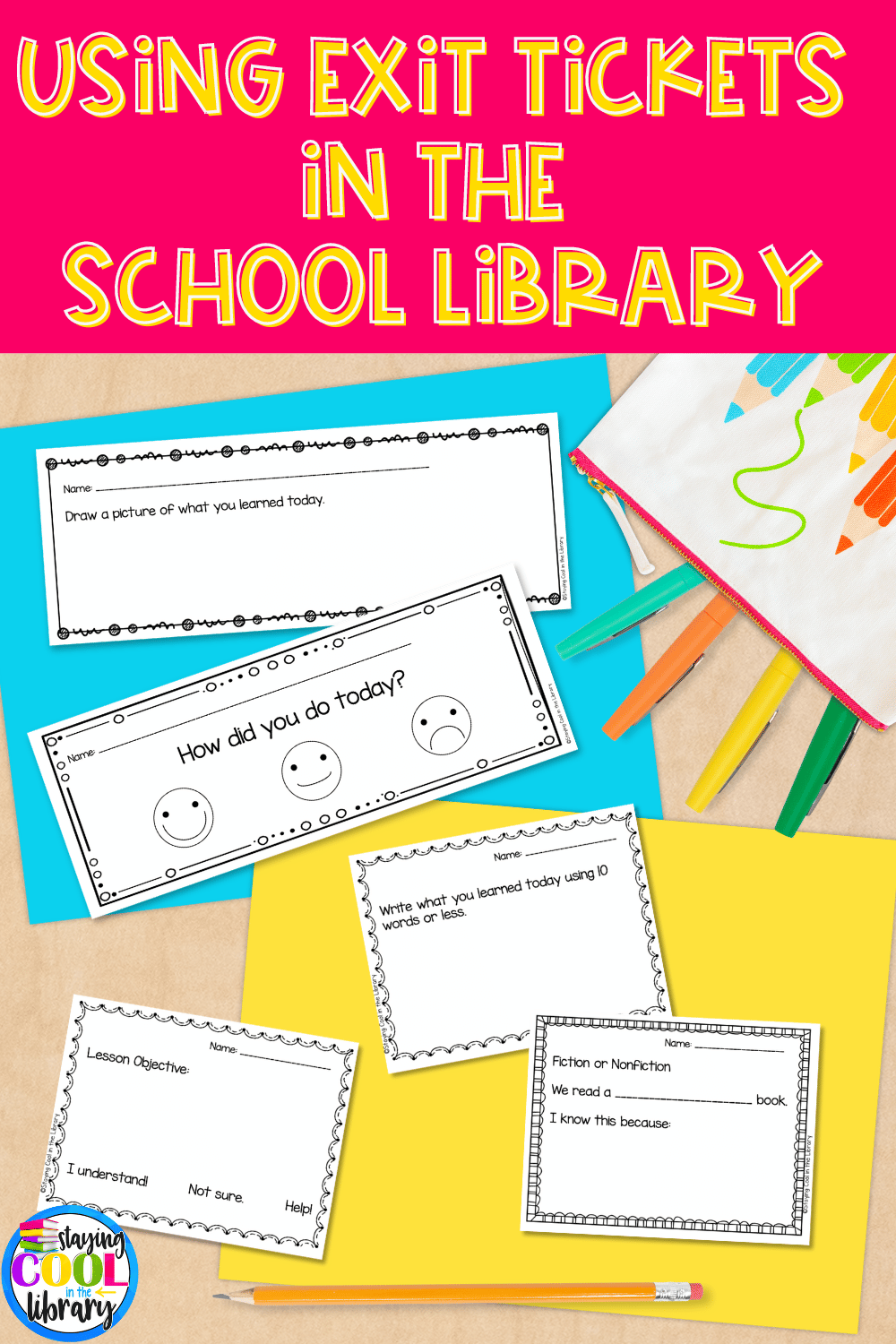
Take a look below to see some examples from each set. These exit tickets are designed to be simple, effective, and engaging, making it easy for you to start using them in your own library sessions. They’re a fantastic way to gather immediate feedback and ensure your students are on track with their learning.
Kindergarten – 2nd Grade Exit Tickets

For my primary students, I use exit tickets from my K-2 Exit Tickets for Elementary Library resource that are perfect for the topics we cover together. These tickets provide a quick and effective way to check for understanding to help me plan future instruction and reteach essential library skills. Each page contains two tickets, which makes them easy to print and copy for each of my classes.
The questions and topics come in various formats. Some tickets ask students to reflect on what they learned today and note any questions they still have. Others might have students color a smiley face to indicate how they feel about their day’s lesson. There are also tickets focused on reading comprehension, call numbers, alphabetizing a list of words, and identifying parts of a book.
Using these exit tickets has been incredibly helpful. They give me immediate feedback on what my students understand and what they might be struggling with. Plus, my kiddos enjoy them, and it’s a fun, interactive way to wrap up our library sessions.
Do you prefer digital over piles of paper? Check out my Digital Library Exit Tickets—Grades K-2.
Third Grade – Fifth Grade Exit Tickets
For my upper elementary students, I also use exit tickets from my Exit Tickets for Elementary Library—Grades 3-5. These tickets provide a quick and efficient way to check for understanding, help me plan future instruction, and reteach essential library skills. Each page has four tickets, making them easy to print and copy. While designed for older students, your younger ones can use them too, depending on their level and ability.

These exit tickets cover a wide range of topics and questions. Some tickets ask students to reflect on what they learned today and write down any questions they have. Others focus on vocabulary words and their definitions or illustrations. There are also tickets that ask students to provide the book title, main characters, setting, problem, and solution, or to identify the author’s purpose with evidence. Additional topics include distinguishing between fiction and nonfiction, rating their participation, and understanding reference books, call numbers, and genres.
Using these exit tickets has been a game-changer. They give me immediate insights into what my students grasp and what needs more attention. The variety of questions keeps things interesting and ensures that I’m covering all the necessary skills. Plus, students enjoy the interactive aspect of filling out the tickets, making it a valuable part of our library sessions.
Explore my Digital Library Exit Tickets – Grades 3-5 for digital versions of all my exit tickets!
Enhance Your Teaching with Exit Tickets in the School Library
Incorporating exit tickets in the school library has truly transformed my teaching. I have been able to connect more effectively with my students. These simple yet powerful tools provide immediate feedback, allowing me to adjust my lessons in real-time. I can better ensure that every student is on track. Whether it’s gauging prior knowledge, understanding key concepts, or tracking progress toward professional goals, exit tickets have become an essential part of my teaching strategy.
If you haven’t tried using exit tickets yet, I highly recommend giving them a go. They can make a difference in how you plan and deliver your lessons. You’ll also be able to create a more responsive and effective learning environment for your students. Let’s embrace this tool and take our library teaching to the next level!
Looking for more interactive ways to get feedback from your students? Check out Using Plickers in the School Library.
Save These Exit Ticket Ideas for Later
Remember to save this post to your favorite school librarian Pinterest board so you can come back when you are ready to try exit tickets in your library.

2 Responses
I just bought these this year and am working to implement them. I absolutely love them! My students are just learning how to use them, but I can already see they will be a great resource for me and my teachers. Thank you so much!
You’re welcome! I’m so happy to hear this. Exit tickets have really been a game changer for me.