Archives

Are you constantly looking for different fiction and nonfiction books for teaching cause and effect to your elementary students? Teaching about story elements such as cause and effect, main idea, character traits, problem and solution and comparing/ contrasting are very important. I’ve compiled a list of 8 awesome fiction and nonfiction picture books for teaching cause and effect to make your life simpler. TEACHING CAUSE & EFFECT Teaching children about cause and effect develops critical thinking skills important for all ages of children — from the 3-year-old deciding not to run across the street to the 11-year-old deciding how to handle peer pressure. Picture books are an especially great way to teach about this concept because the illustrations support the meaning of the text and show cause and effect in action.  Start with a picture walk to open a discussion around the key cause and effect moments. Reinforce to
Today, let’s chat about my top picks for fiction and nonfiction book pairings tailored for the older crew. Specifically, those spirited 4th to 7th graders. Guiding these students into the magical realms of both fiction and nonfiction is a special task. As they navigate this pivotal age range, I’ve found that while fiction tends to steal the spotlight, coaxing a 6th grader into exploring nonfiction can be quite a rewarding challenge. In my experience, the key to successful book pairings for this age group lies in aligning the reading choices with their individual interests. To spice things up, I often turn the decision-making process into a fun activity. I often conduct a poll to unravel the topics that spark their curiosity and get them excited. So, together, let’s unravel how book pairings captivate our older students as they journey through fiction and nonfiction texts! Oh and before we jump
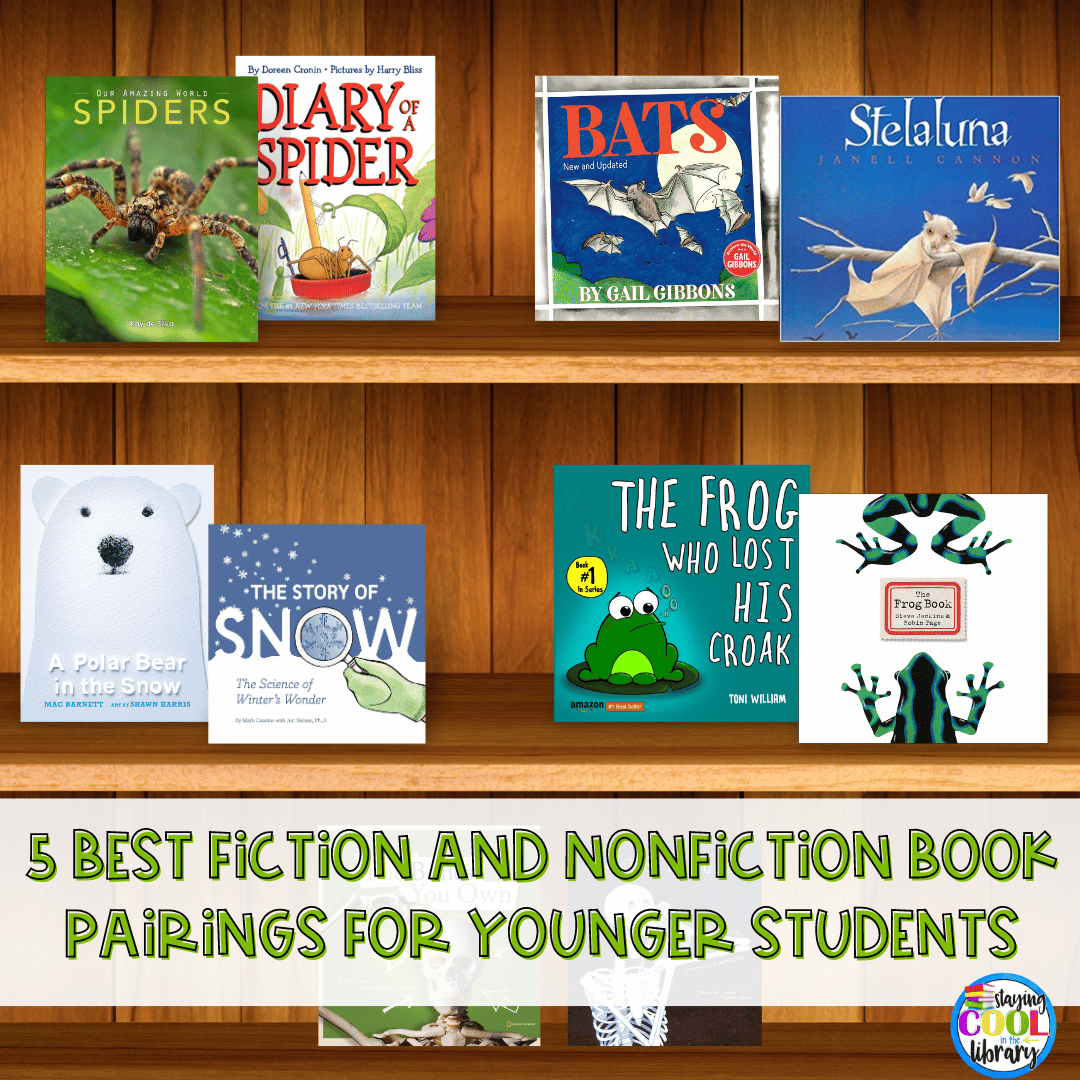
Exploring the world of fiction and nonfiction through book pairings is truly a highlight when working with my students. It’s a strategy that can be used with any age to unravel the characteristics of each writing style. More than just an academic exercise, book pairings inspire students to dive into both realms of fiction and nonfiction. In the world of younger students, these pairings play a pivotal role in laying the foundation for their literary journey. Choosing shorter yet captivating books for grades K-2 ensures that there’s ample time for thorough exploration. The key is in the ensuing discussions where our students start to discern the differences between fiction and nonfiction. It’s a delightful process that fosters a love for reading and a keen awareness of the diverse literary landscapes that await exploration. Importance of Fiction and Nonfiction Book Pairings for Younger Students It’s safe to say for all
How do you feel about reading wordless picture books to your students? Do you know how powerful wordless picture books actually are? If you want to truly measure your student’s comprehension skills or imagination, try reading wordless picture books with them and see if they can understand what is happening in the story based on the pictures alone. In addition, the low pressure nature of a picture book allows children of all abilities to join in and feel successful. Wordless picture books are great resources to encourage joint interest, vocabulary, sequenced language, making inferences and engaging in discussion. Here are 6 wonderful wordless picture books to read with your students, as well as some lesson ideas to incorporate with them. Unspoken: A Story from the Underground Railroad by Henry Cole  Summary: When a farm girl discovers a runaway slave hiding in the barn, she is at once startled and
Well it’s ALMOST sweet summertime here in Virginia (school ends June 19 to be exact!) and that means a couple of things for me:  I think as librarians it’s really important to make sure that we are always at the “top” of our game. I like to use summer to read 1 or 2 professional development books to refresh and reset before the new school year. It helps me feel energized and excited about going back to school (Keep in mind that I never start doing this until after 4th of July!) It also gives me new tips and ideas to try in the library, as things are always changing. In case you want to up your professional development game as well, I have created a list of the 10 BEST professional development books for librarians below. (All of the Amazon links are affiliate links). Hacking School Libraries 10
February is National Black History Month. There are some great books for read-alouds that I love to use in February and some fun activities to go with them to help celebrate Black History Month that I would love to share with you today. Here are the best read alouds to celebrate Black History Month.  *This post contains affiliate links. It just means that if you purchase the products that I recommend, I receive a small commission. Thanks! HENRY’S FREEDOM BOX: A TRUE STORY FROM THE UNDERGROUND RAILROAD  By: Ellen Levin Book Description: A stirring, dramatic story of a slave who mailed himself to freedom. Henry Brown doesn’t know how old he is. Nobody keeps records of slaves’ birthdays. All the time he dreams about freedom, but that dream seems farther away than ever when he is torn from his family and put to work in a warehouse. Henry grows

Staying Cool in the Library is my blog, where I share my passion for fostering a love of reading with children. As a librarian, I believe reading should be fun and accessible to all students. That’s why I share engaging and interactive lesson plans, creative ways to build exciting library collections, and resources to inspire even the most reluctant readers in any classroom or library. Check out my blog posts and products in my store, and join my email list below.

[convertkit form=966981]

Categories