


An age-old question students have is, “Why are we doing this?” Students have asked that question for decades before us, and they will continue to ask well into the future. Luckily, there is a simple answer to why citations are important. In the digital age we live in, it’s absolutely critical to understand copyright and plagiarism. Citations are important whether students are writing a paper and need to cite evidence, or when using music for a presentation. Each of these areas comes with its own rules and regulations for copyright.
Why Citations are Important
Citations are important because they protect people’s work. When we cite a work correctly, we are giving credit to the owner or creator of that work. Being fair is something students are often naturally passionate about, so help bridge that connection for students. When we cite = we are being fair.
In order to appropriately use or reference someone else’s work, we must be fair to them by citing them and giving them credit. You can make this relatable to elementary students by asking them to imagine working on a project with a classmate, and when it comes time to present their work, the classmate takes all the credit for the good ideas. It’s also important to share with students that this is a timely discussion because, in the age we live in, copyright and plagiarism are easier than ever to infringe upon.
How the Digital Age Makes Copyright and Plagiarism Even Easier
With the internet, social media, and that darn “copy and paste” button, it’s easy to ignore copyright laws. When students ask why citations are important, you don’t have to look too far for an answer!
Rather than having to read books and then come to their own conclusions before writing, students can easily find a written piece that describes their thinking and copy it right into a document. Students desire to get things done as quickly as possible and can easily fall into the “copy and paste” trap. Of course, many of them don’t cite or don’t realize the harm of plagiarism.
Another important factor to consider when discussing copyright and plagiarism is the more unknown territories like social media. We know how to teach students to cite a source from a book or a website, but a social media channel is newer and can get tricky. The unknown of intellectual copy infringement when it comes to some of these things can make school personnel hesitant to tackle this topic with students.
And now with AI and ChatGPT? Copyright issues and plagiarism are more relevant than ever. Of course, the laws and regulations around these platforms is currently evolving – but it will be interesting to see what happens in the coming years.
How to Teach Students About Citing
In order to make sure students fully grasp copyright, I recommend the following activities.
1. Talk About Writing Citations
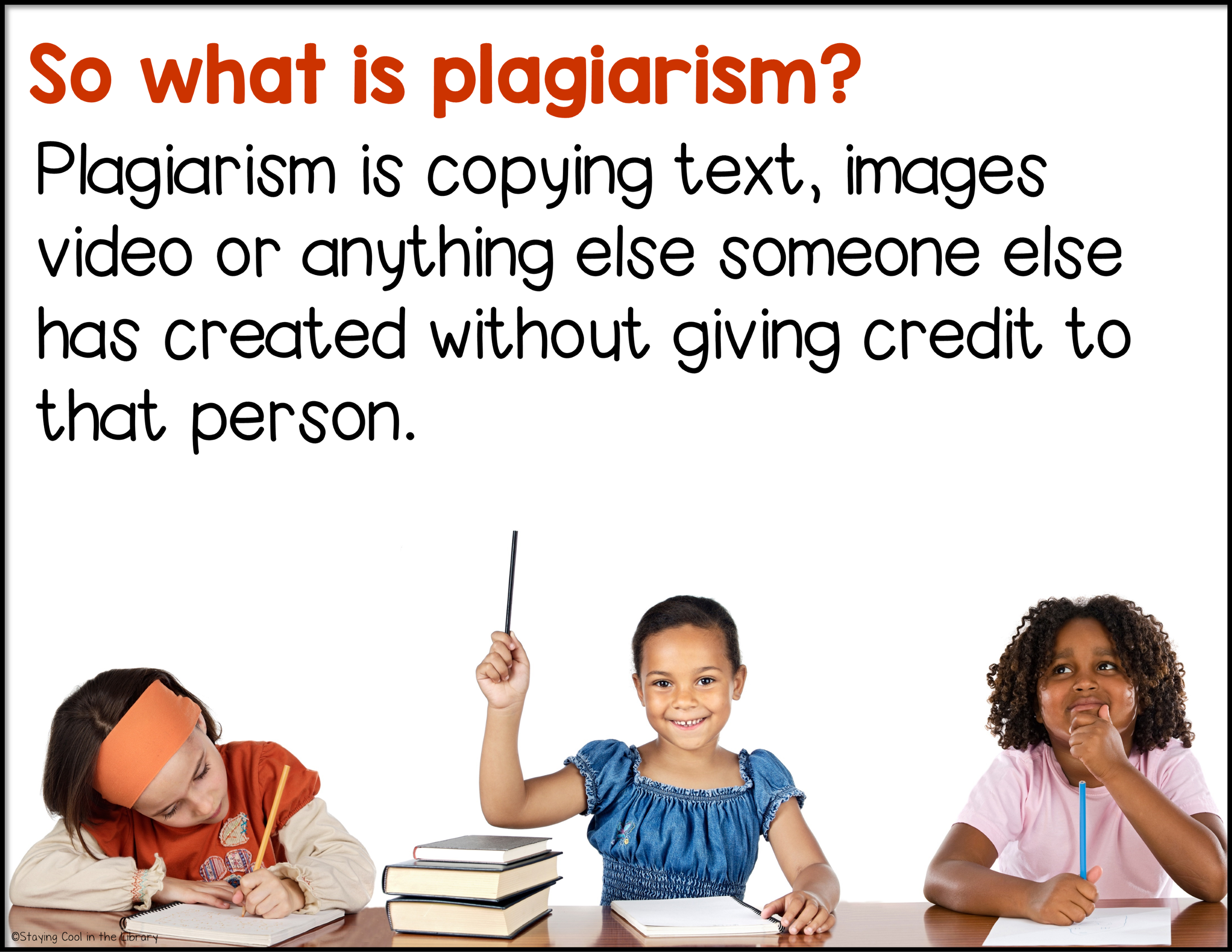
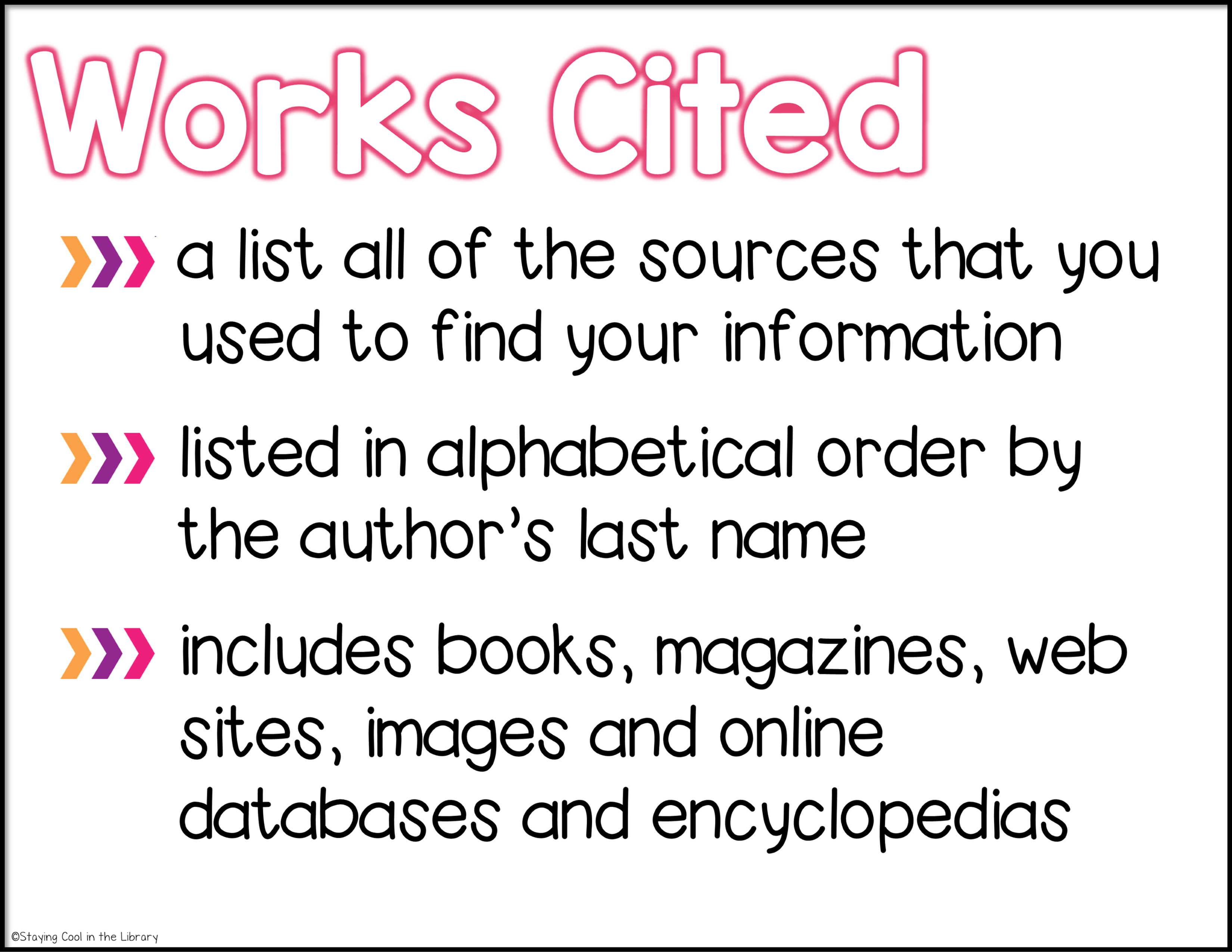
First, talk about why citations are important, what they are, and how to write them. You can do this with a quick mini-lesson. Then, give examples of citations and works cited.
I have a Works Cited, Copyright and Plagiarism Activities Resource to support you through these conversations. Included in the resource is an introductory PowerPoint presentation that goes through all of this information with students, including background information, key vocabulary, and examples.
2. Interact with Citations
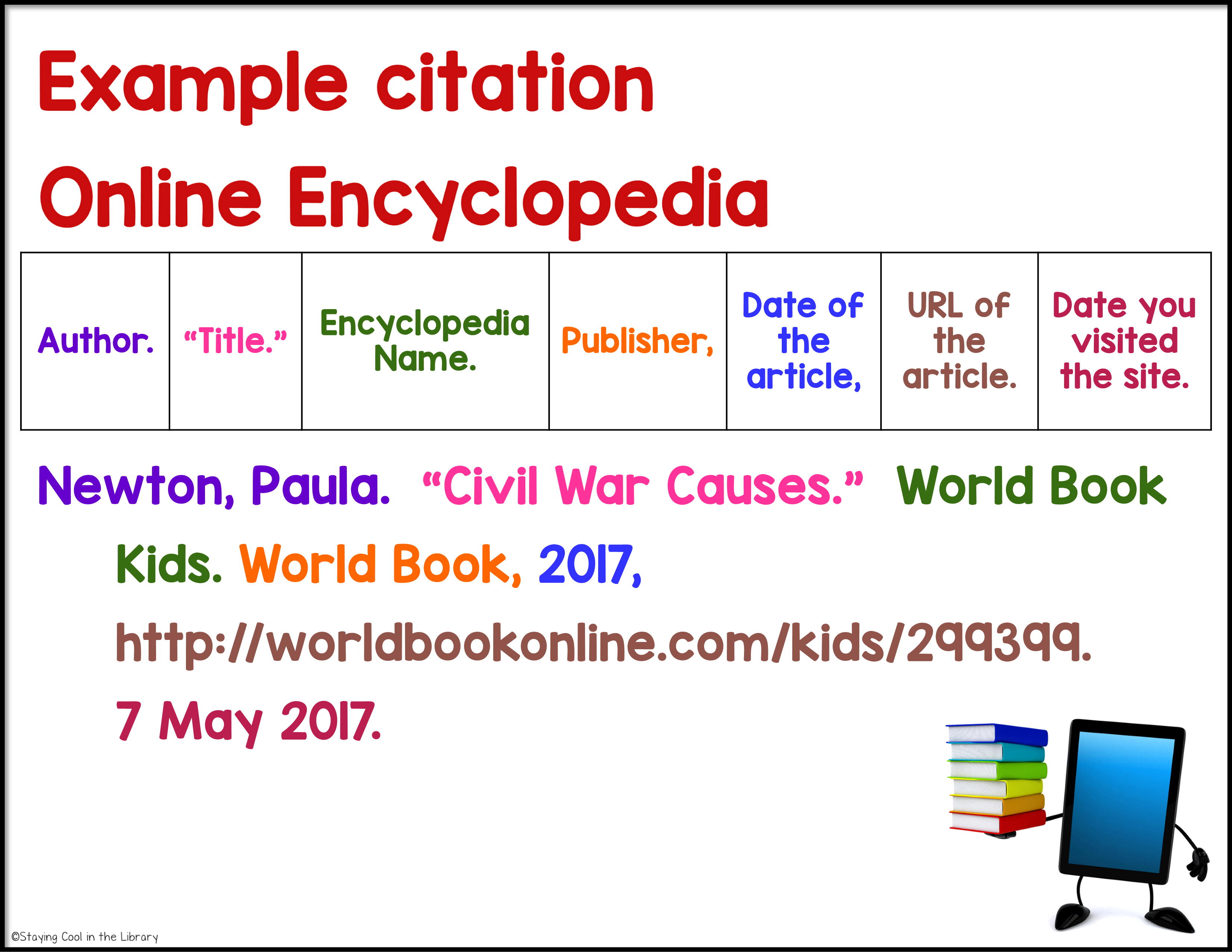
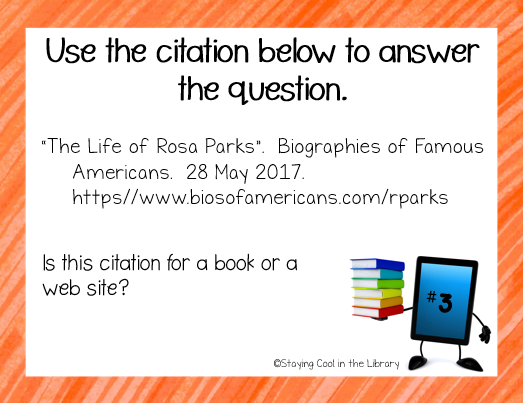
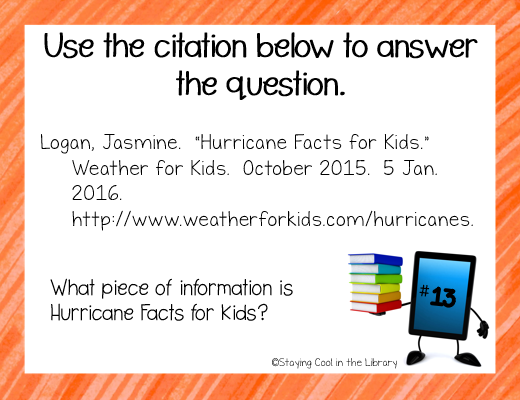
After students are aware of what citations are, it’s a good idea to have them interact with citations. You can start by giving students examples of citations and having them identify the various parts. For example, you could share a citation and have students hunt for the title of the source or the author. There are done-for-you examples on task cards within my Works Cited Resource, which you can use to complete this activity.
Once students are comfortable identifying parts of a citation, have them create their own. You can make this as fun as you want for your students. Have them split into teams and do a sort of relay race. The first person adds the title, the next person adds the date, and so on.

3. Review and Practice
After students have had a chance to interact with citations, the next step is to review and practice often. One engaging way to do this is to have students “play judge.” Give students scenarios and have them identify if the person is infringing copyright or committing plagiarism.
Within my Works Cited Resource, you’ll find worksheets with practice scenarios you can use for this activity. This is an easy way to assess whether students truly understand copyright and plagiarism. It can be a challenging topic, so if they are unable to successfully identify the scenarios, you’ll know to go back and interact more with citations.
4. Ready-to-Go Copyright and Plagiarism Resource
Teaching students about why citations are important can be a daunting task, but it’s a life skill with real implications! Take some of the pressure off of yourself with the Ready-to-Go Copyright and Plagiarism Resource.
In it, you’ll find a 22-slide PowerPoint and Google Slides presentation introducing citations and how to write them, 3 review worksheets, and 18 task cards. There is even a set of editable task cards included if you want to create your own! This resource has everything you need to show students why citations are important.
